

The story
Fifty meters that restored a year-round connection.
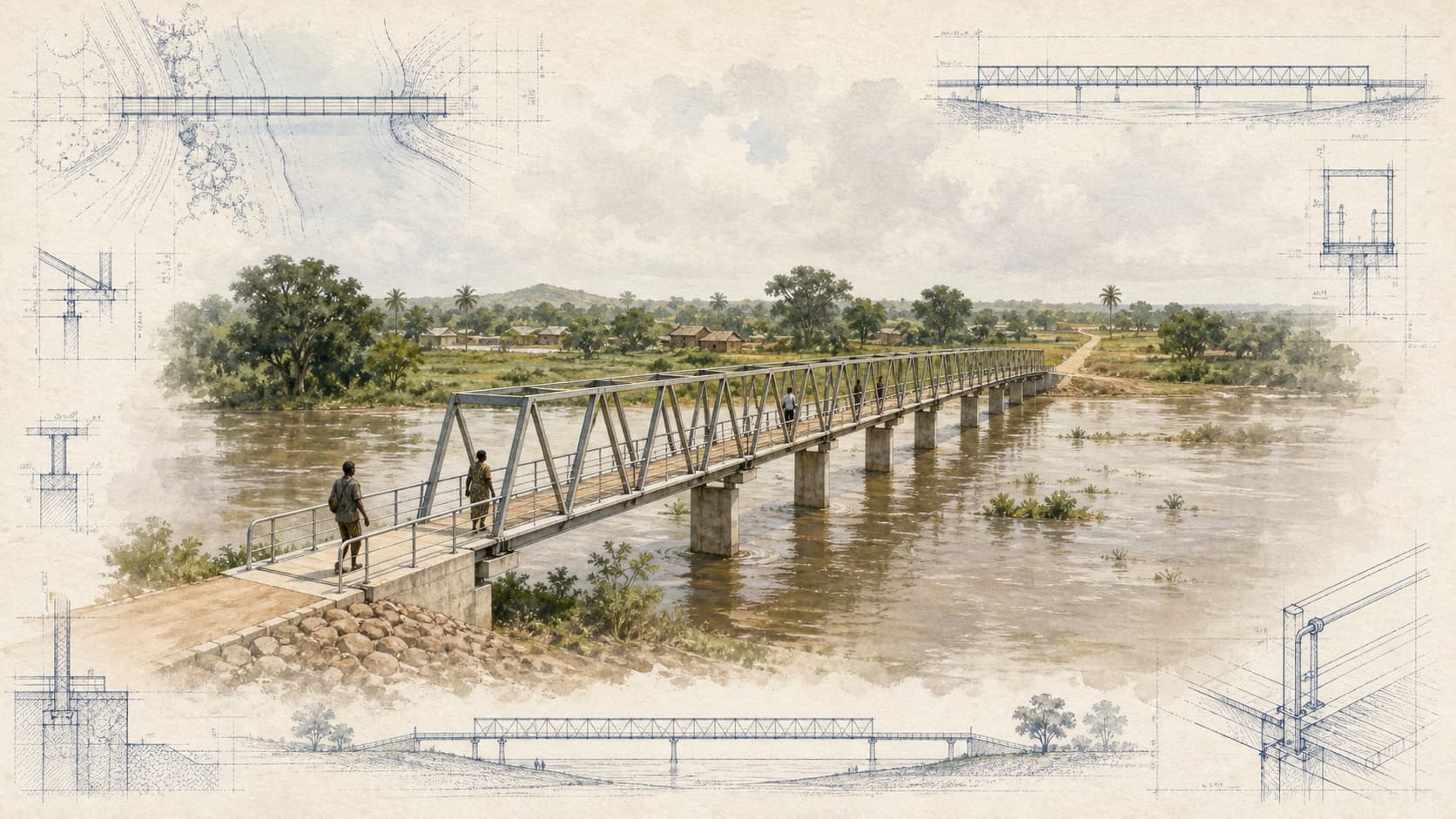
For several months each rainy season, flooding cut Talaba off from the roads, markets, healthcare, and services beyond the village. The Canard’Zailés project addressed that isolation with one precise piece of infrastructure: a roughly 50-meter bridge designed for pedestrians and motorcycles. Students from the Architecture School of Paris–Val de Seine worked with the Canard’Zailés organization, local partners, and Journeyman International to translate seasonal water conditions, available construction knowledge, and everyday travel patterns into a buildable crossing. The bridge was completed and now serves the crossing it was designed to support.
Its significance is not architectural spectacle but continuity. A route that disappeared when water rose became dependable throughout the year, making school, trade, care, and family connections less vulnerable to the season. The project shows how design can be powerful at the scale of a path: understand the exact break in a community’s network, build only what is needed to span it safely, and let the value appear in the ordinary journeys people can make again.