The story
An eco-farm where every system becomes part of the lesson.
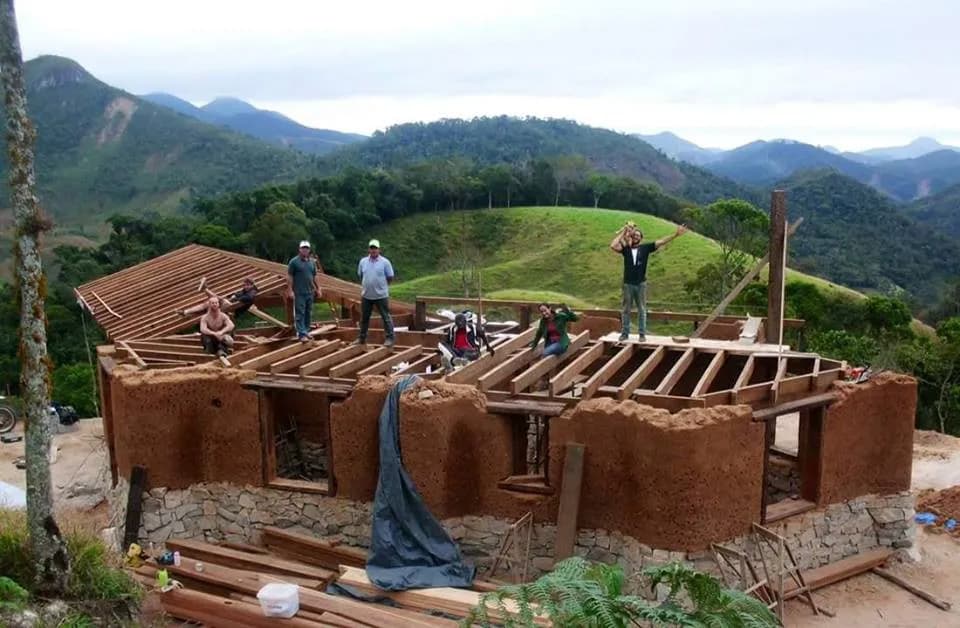
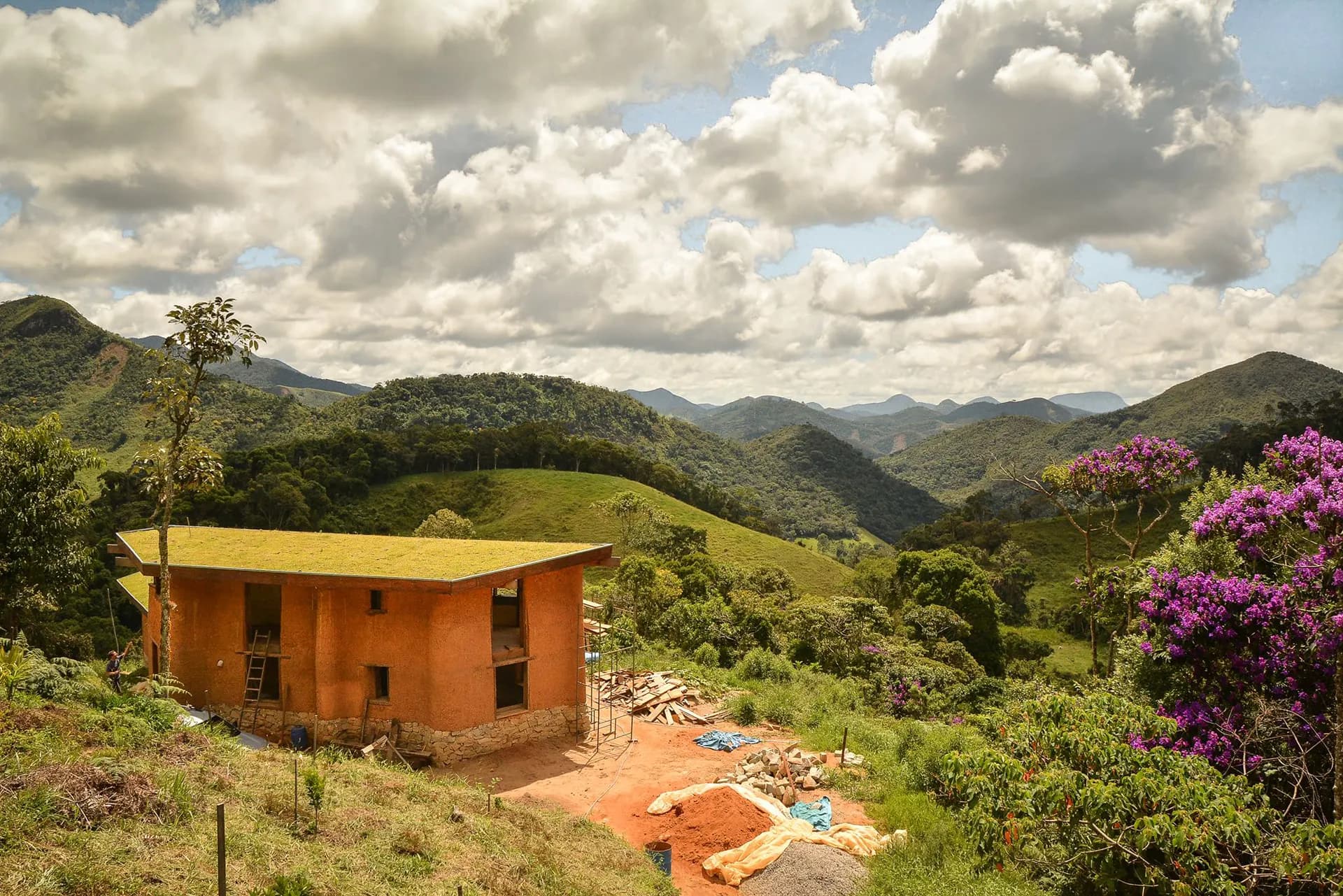
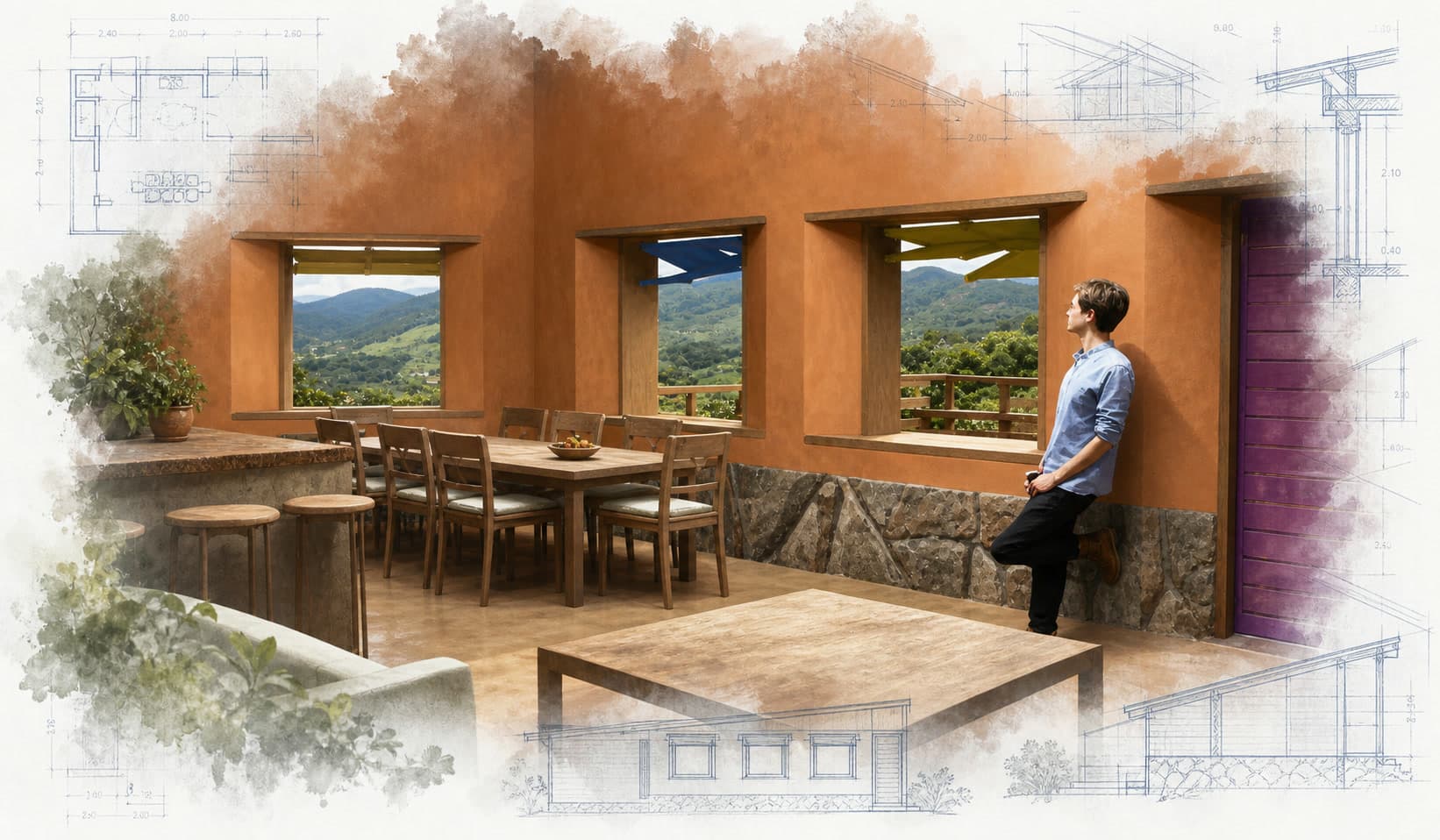
In the hills near Nova Friburgo, Eco Caminhos envisioned a vocational center where young people could learn ecological living by helping operate a real place. Stephanie Carl’s thesis organizes the project as a phased eco-farm combining natural construction, organic agriculture, renewable energy, waste treatment, workshops, and visitor accommodation. Food, power, water, and building materials are not hidden utilities; they are visible systems that students can work with and improve. Eco-tourism and lodges help support the educational mission financially, while hands-on construction and farming connect instruction to viable skills.
Site research, climate analysis, and local context shaped a campus intended to become increasingly self-sufficient over time. Developed with Eco Caminhos and Journeyman International, the work remains a design and phasing proposal. Its strongest idea is pedagogical: sustainability is easier to understand when learners can inhabit it—harvesting food, treating waste, generating energy, and making buildings within one connected landscape.