The story
Small storefronts become shared engines for rural enterprise.

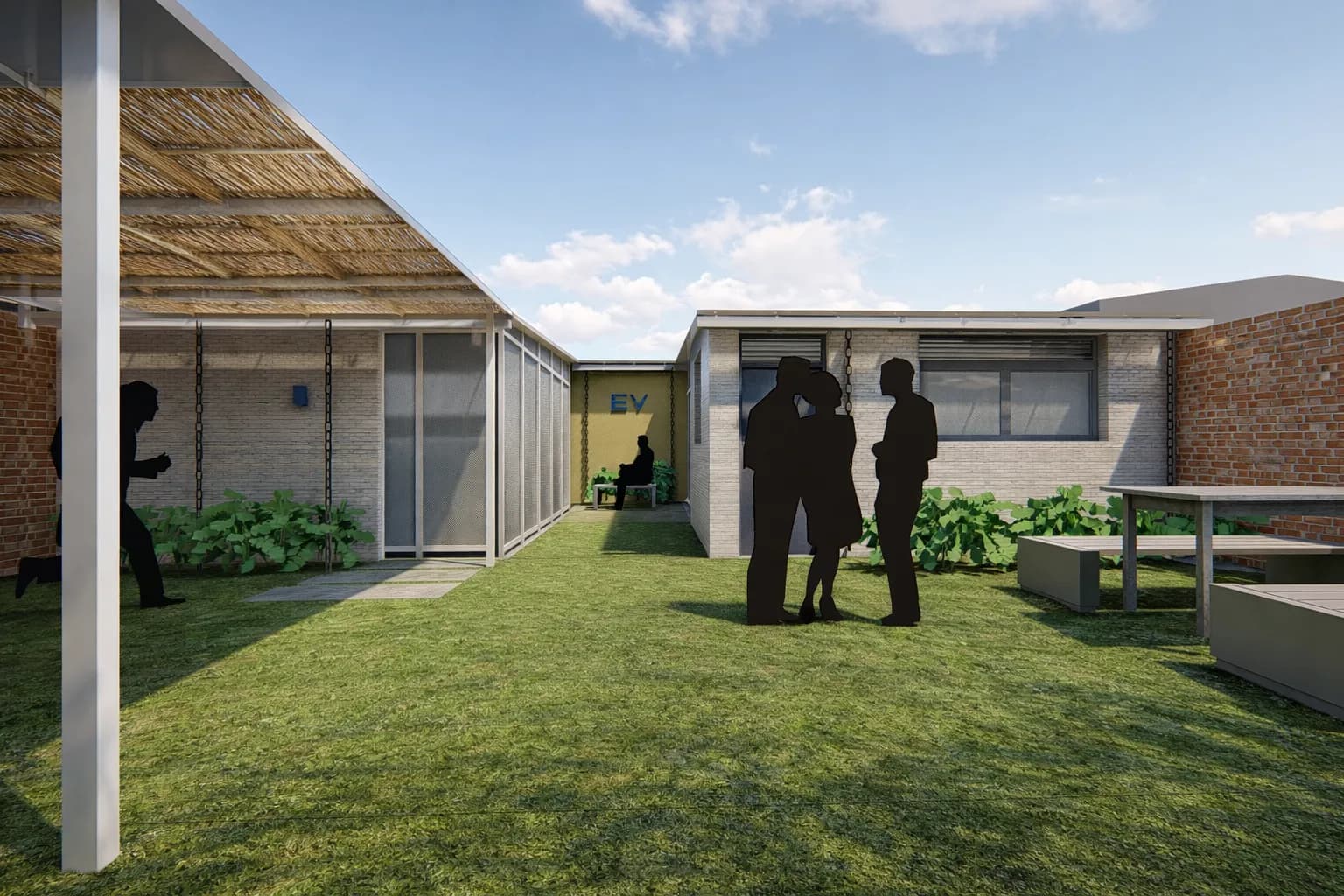
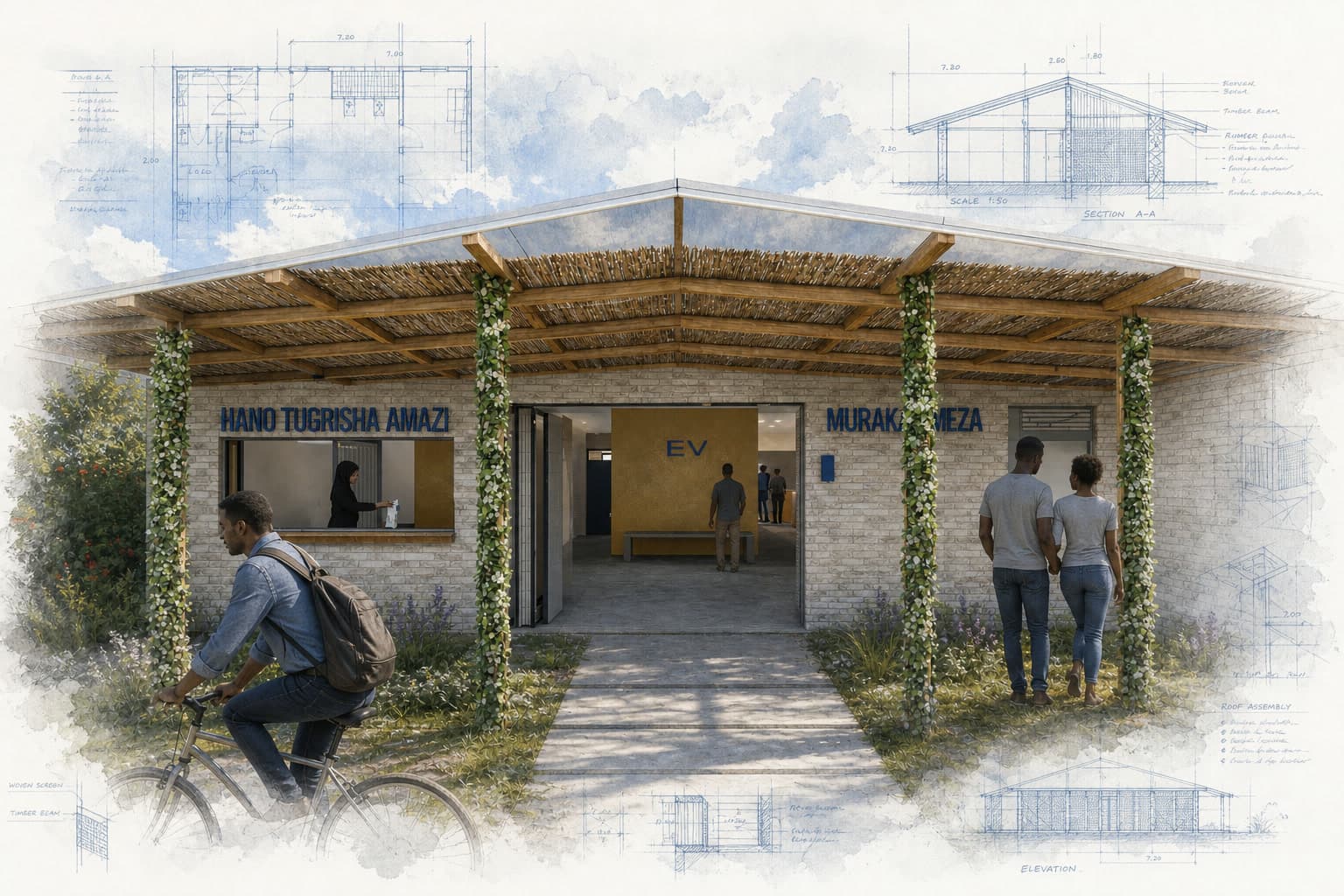
Empower Hubs were conceived with Empowering Villages as compact business-incubation centers for rural, off-grid communities. Instead of giving one enterprise an entire building, the design divides a flexible storefront into modular kiosks and shared support space. Entrepreneurs can begin at an attainable scale, learn alongside one another, and adjust their footprint as a business changes. Common infrastructure and a recognizable hub identity reduce the burden each operator would carry alone, while the public frontage makes local products and services easier to find.
Journeyman International refined the model during Empowering Villages’ transition to the Kinvest identity, connecting its architecture to a broader commitment to community-owned potential. The project establishes a repeatable proposal that can be adapted for future hubs. Its strength lies in disciplined modesty: a small, adaptable building can support many kinds of enterprise when workspace, visibility, mentorship, and basic systems are deliberately shared instead of duplicated.