

The story
A vocational campus where accessibility begins with the plan.
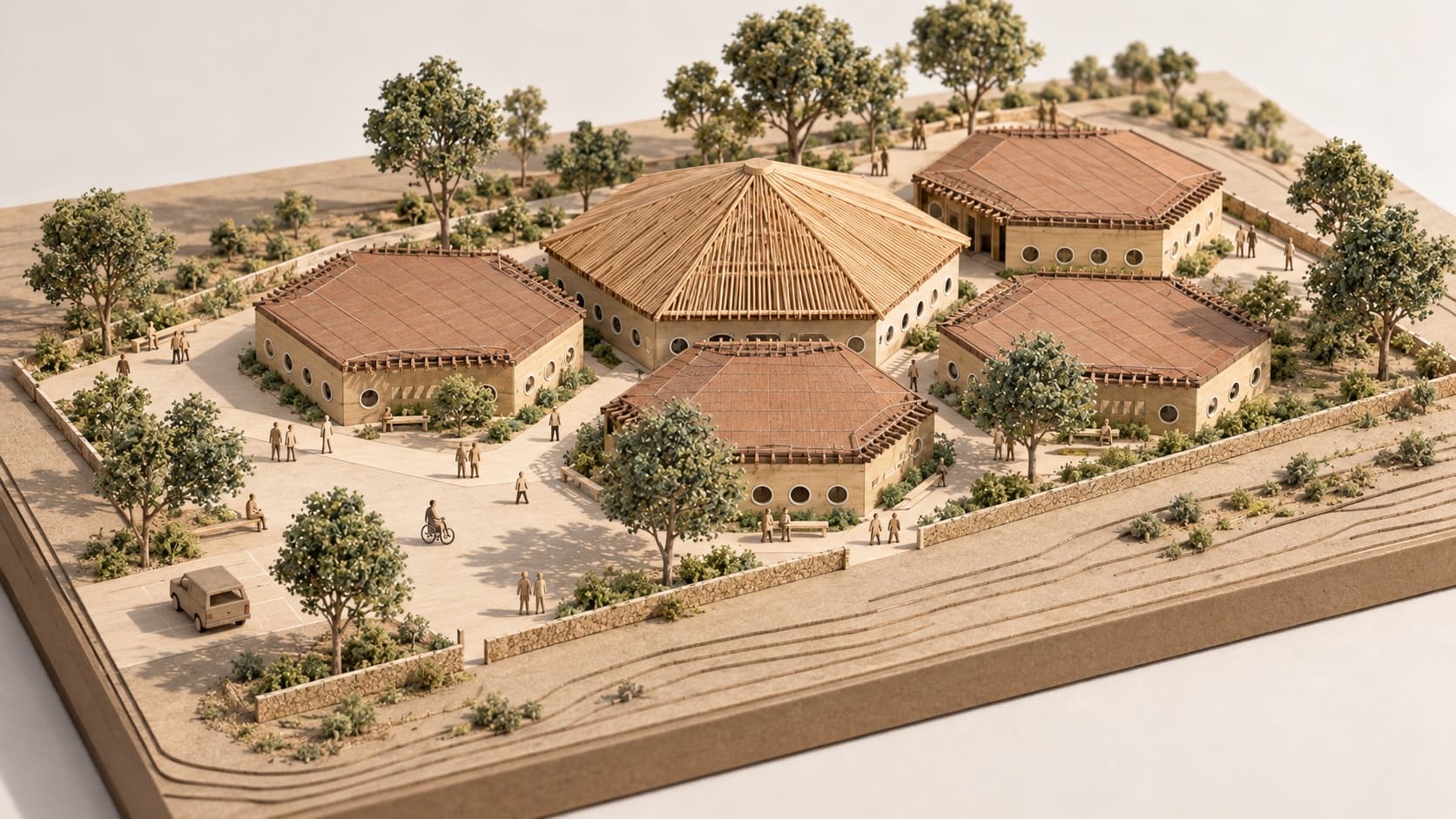
Hope for Africa proposed a vocational school in Gulu for young people with disabilities and those without dependable family care. The campus combines education with practical trades so students can develop skills connected to employment and greater independence. Administrative and staff areas support the school, while workshops, classrooms, sanitation, and circulation must work for learners with different mobility and sensory needs.
Accessibility is therefore not a ramp attached to an otherwise conventional building; it determines route widths, level changes, toilets, workstations, visibility, rest, and how students move between instruction and making. Journeyman International’s design role was to bring those needs into one coherent institutional plan without reducing students to vulnerability. Its architectural purpose is direct: create a school where disabled students can participate fully in hands-on learning and where dignity, useful skill, and future work are supported by the everyday organization of space.