

National Park Ranger Station

Amazon Rainforest, Peru

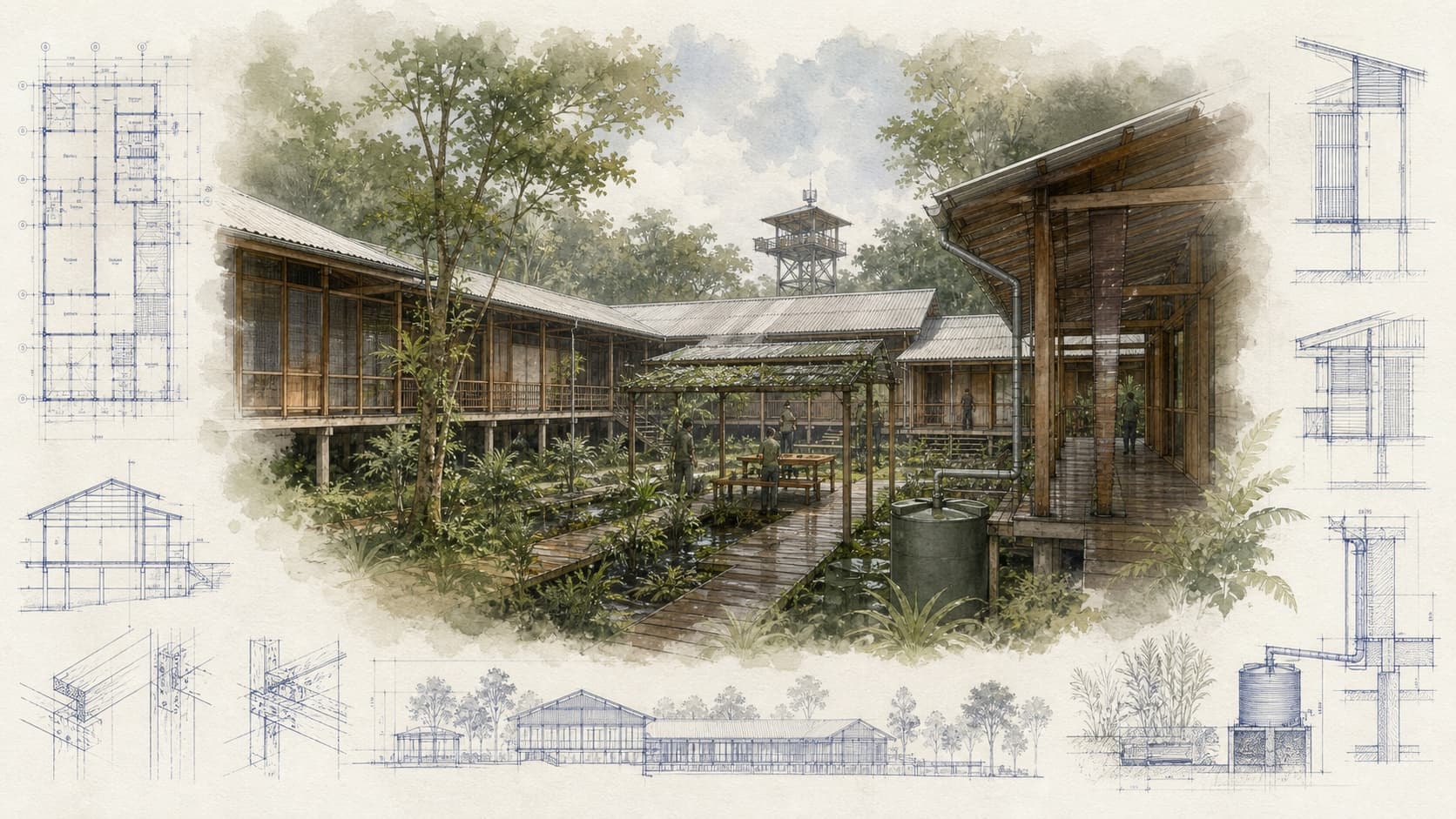
The earlier Peru ranger-station work is tied to the Las Piedras Amazon Center near the river in Tambopata. Designed as a conservation and research post, it combines staff accommodation, field preparation, equipment, observation, and basic work areas within a compact footprint.

National Park Ranger Station architectural visualization with watercolor and blueprint details

The story

A research post placed carefully within the Las Piedras landscape.

The earlier Peru ranger-station work is tied to the Las Piedras Amazon Center near the river in Tambopata. Designed as a conservation and research post, it combines staff accommodation, field preparation, equipment, observation, and basic work areas within a compact footprint. Remote operation drives the architecture: river arrival, screened ventilation, shade, rain protection, water, energy, waste, and repairable construction matter more than a conventional institutional image. The station gives rangers and visiting researchers a base from which to monitor habitat and coordinate work while limiting unnecessary clearing around the site.

Journeyman International’s archive includes 2018 architectural drawings associated with the Las Piedras center but does not verify the station’s completed status. This entry is therefore presented as the foundational design phase, distinct from the later expanded-headquarters proposal. Its value lies in careful occupation—create enough infrastructure to sustain conservation work, concentrate human impact, and keep the surrounding rainforest rather than the building as the dominant presence.

Project evolution

One conservation mission, developed in two commissions.

The two former portfolio records describe successive design phases for the Amazon Rainforest Conservancy. They now live together so the progression from a compact research post to an expanded headquarters is clear.

  1. Project 20-118

    Foundational research post

    A compact Las Piedras base for accommodation, field preparation, equipment, observation, and low-impact operation in the rainforest.

  2. Project 23-169

    Expanded headquarters

    A later proposal adding training, research, communications, surveillance, and the infrastructure needed to coordinate conservation work at a larger scale.