Seeds of Hope Community Development Center

Ndola, Zambia

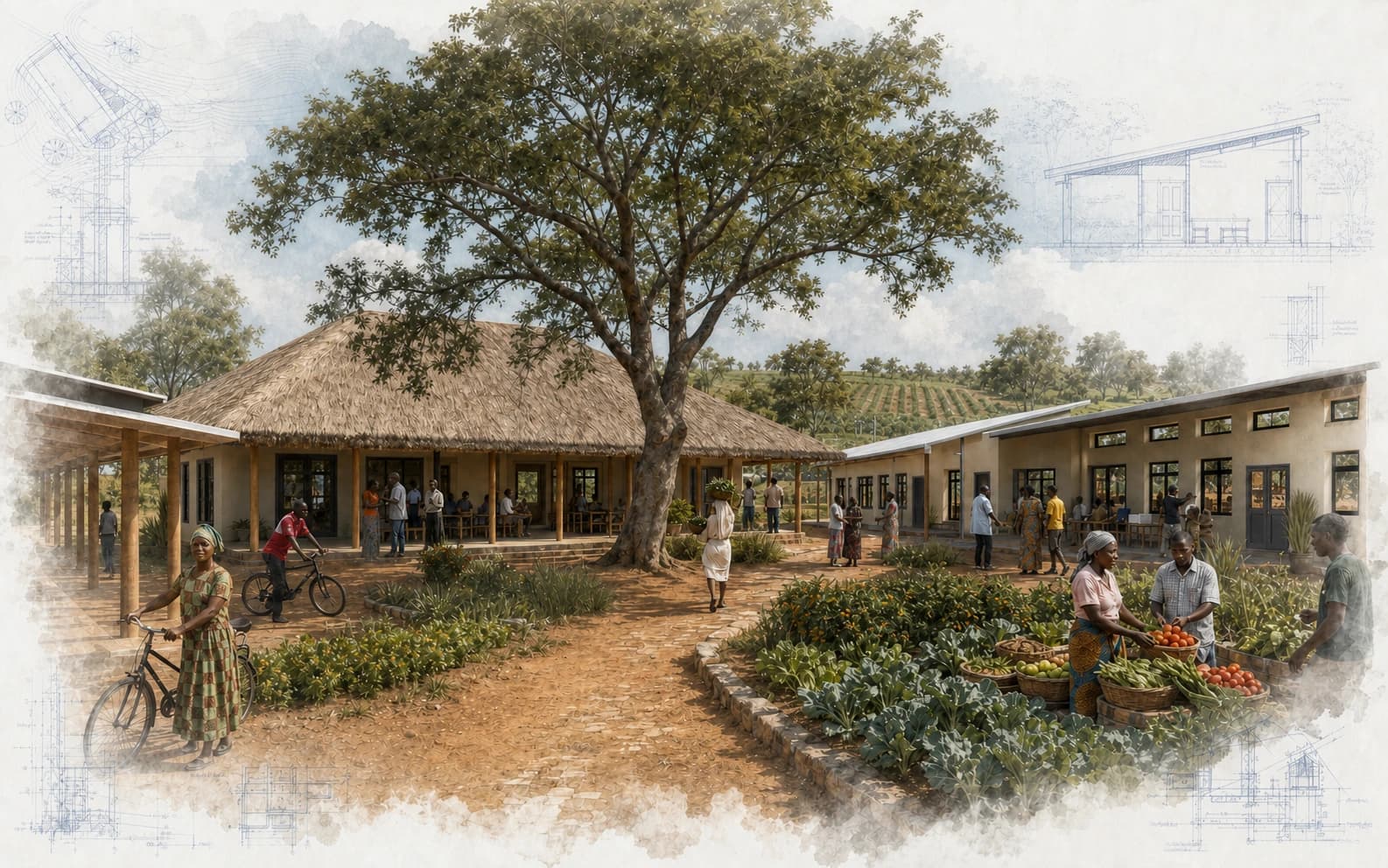
Designed as a working campus, the proposal links clean water, agriculture, vocational training, sanitation, and community spaces so every system can teach. A public loop through classrooms, gardens, workshops, and gathering places makes those connections visible.

Architectural visualization of the Seeds of Hope campus in Ndola, with classrooms, gardens, and community activity gathered beneath a mature tree

The design question

Can a campus teach—even when class is not in session?

By 2012, Seeds of Hope reported that its teams had taught hygiene and sanitation to more than 7,500 Zambians. The next step was not simply a larger facility. The proposal imagined a working campus where clean water, agriculture, vocational training, sanitation, and community life could be learned together.

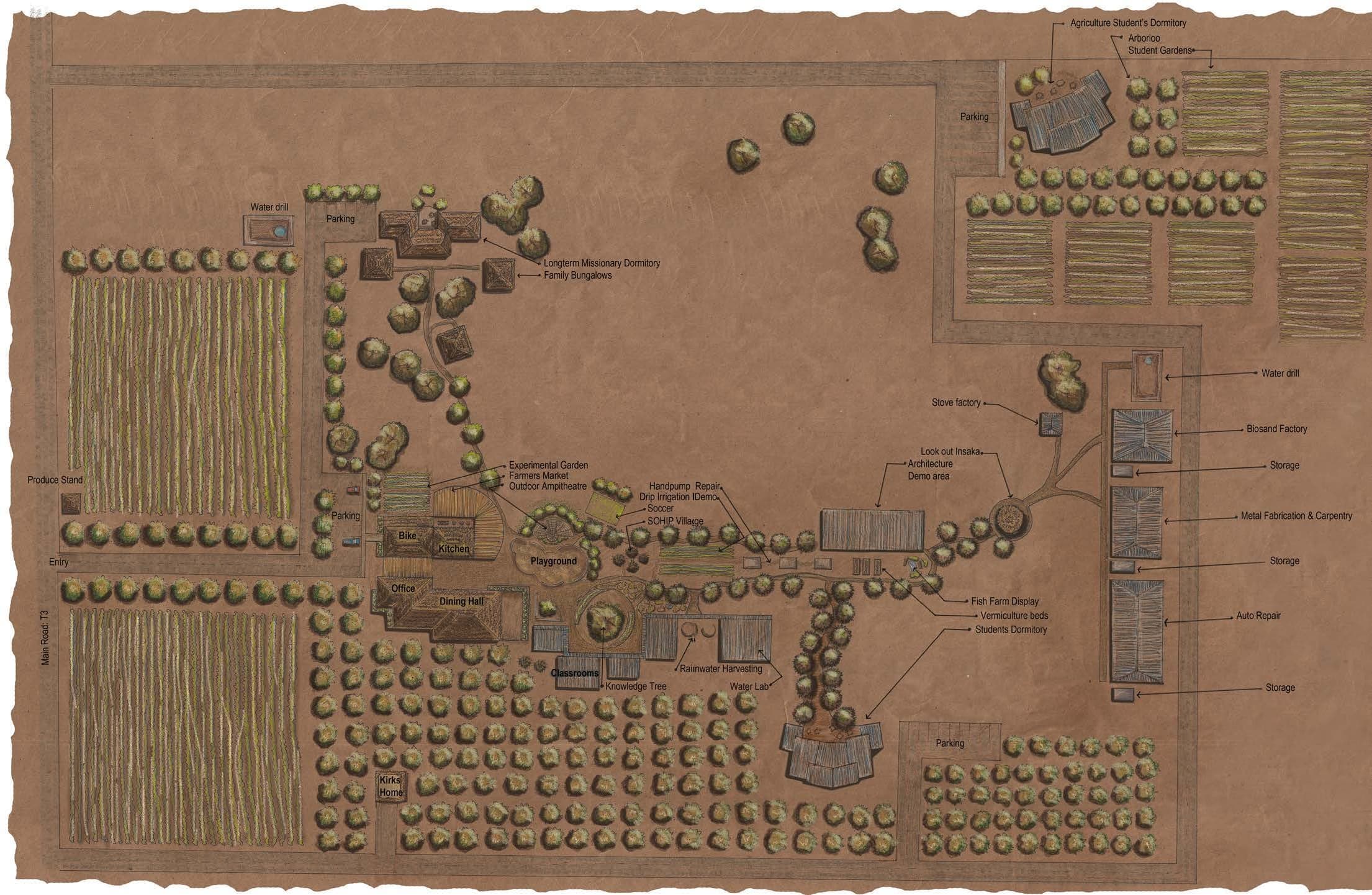
Journeyman organized the plan as a public demonstration. A looping path begins at the central office, then carries visitors past classrooms, fields, workshops, gardens, the market, playground, amphitheater, and architecture displays. Each stop explains a useful system; together, they show how skills and resources can circulate through a community.
2012
Proposal year
25 acres
Campus designed
5 buildings
Classroom complex
150 people
Amphitheater capacity

One working campus

Five systems.
One shared lesson.

The proposal’s strength is the connection between programs. Water supports food production. Waste becomes fertilizer. Workshops create services. Markets and gathering spaces keep knowledge moving.

  1. 01

    Clean water

    Hand-pump repair, a biosand-filter workshop, rainwater collection, and a water lab turn public health into practical training.

  2. 02

    Food and land

    Demonstration gardens, drip irrigation, vermiculture, fish ponds, and farm plots connect ecological methods to dependable food and income.

  3. 03

    Skills and work

    Sewing, computing, carpentry, metal fabrication, bicycle repair, and auto repair move learning directly into useful services and livelihoods.

  4. 04

    Health by design

    Hygiene education and composting latrines show how handwashing, sanitation, water conservation, and soil fertility can reinforce one another.

  5. 05

    Community life

    An insaka, teaching kitchen, market, playground, library, and amphitheater make gathering part of the campus—not leftover space between buildings.

Illustrated Seeds of Hope campus plan linking classrooms, workshops, housing, water systems, and agricultural fields
The 25-acre proposal · Ndola, Zambia

The plan is the curriculum

Follow the loop. See how it works.

Visitors would begin and end at the central complex, where bikes, biosand filters, sewing work, and other products made on site could be displayed. From there, the path turns the campus into a sequence of lessons rather than a collection of isolated buildings.

Thatched central buildings draw on familiar Zambian construction. Classrooms and workshops use reinforced masonry, corrugated roofs, shaded openings, and locally sourced materials selected for durability, affordability, and local building knowledge.

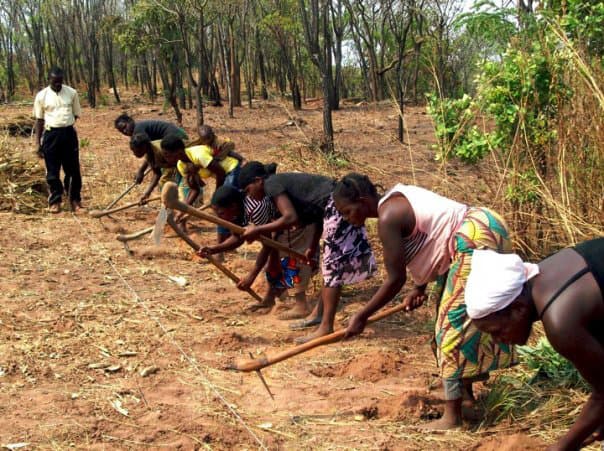
Community members preparing dry soil together for cultivation in Zambia

01Learning begins with the land

Agriculture students could stay for six months, tend nearby plots, test new crops, and carry practical methods home.

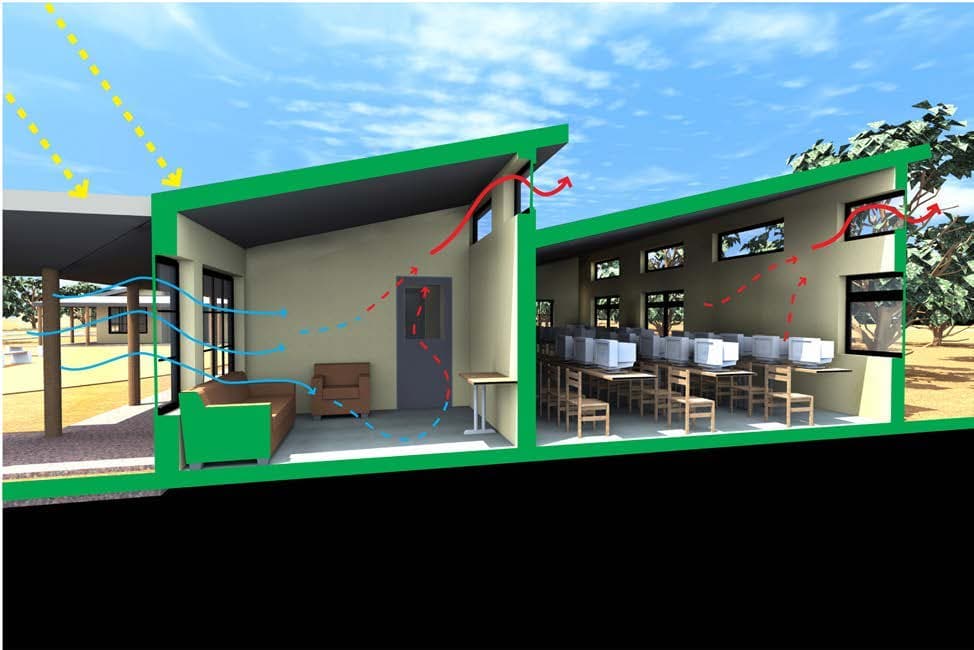
Cutaway visualization of the Seeds of Hope classroom showing daylight and cross-ventilation strategies

02Comfort without air conditioning

Clerestories, shaded northern windows, southern daylight, and cross-ventilation respond directly to Ndola’s climate.

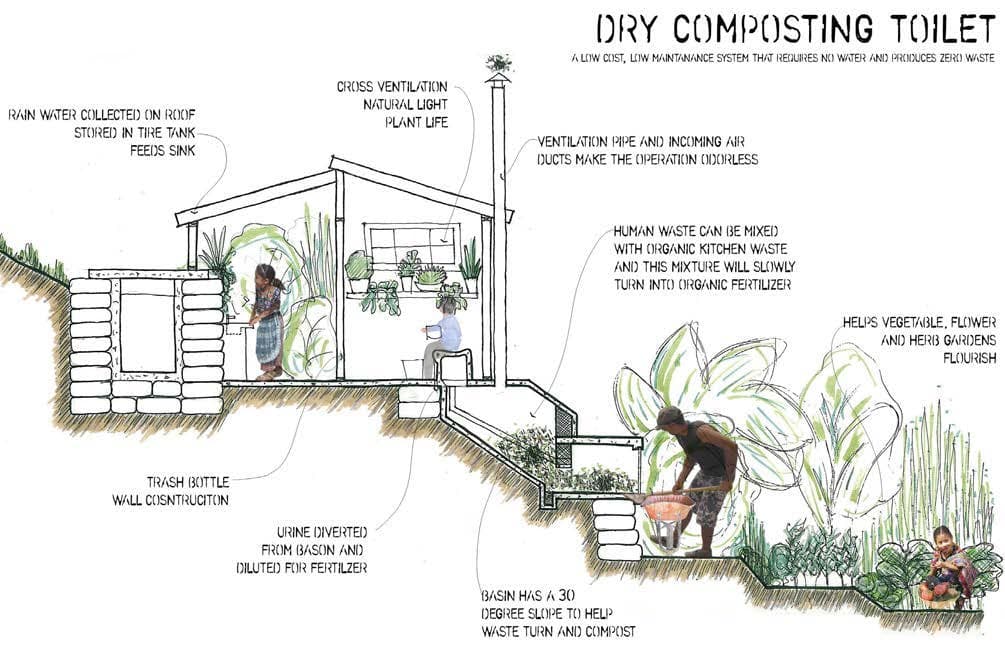
Seeds of Hope design drawing for a dry composting toilet, rainwater collection, and productive gardens

03Waste becomes a resource

The composting-toilet study links sanitation, rainwater, fertilizer, and productive gardens in one understandable section.