

The story
Flood recovery becomes a plan for safer, more connected village life.
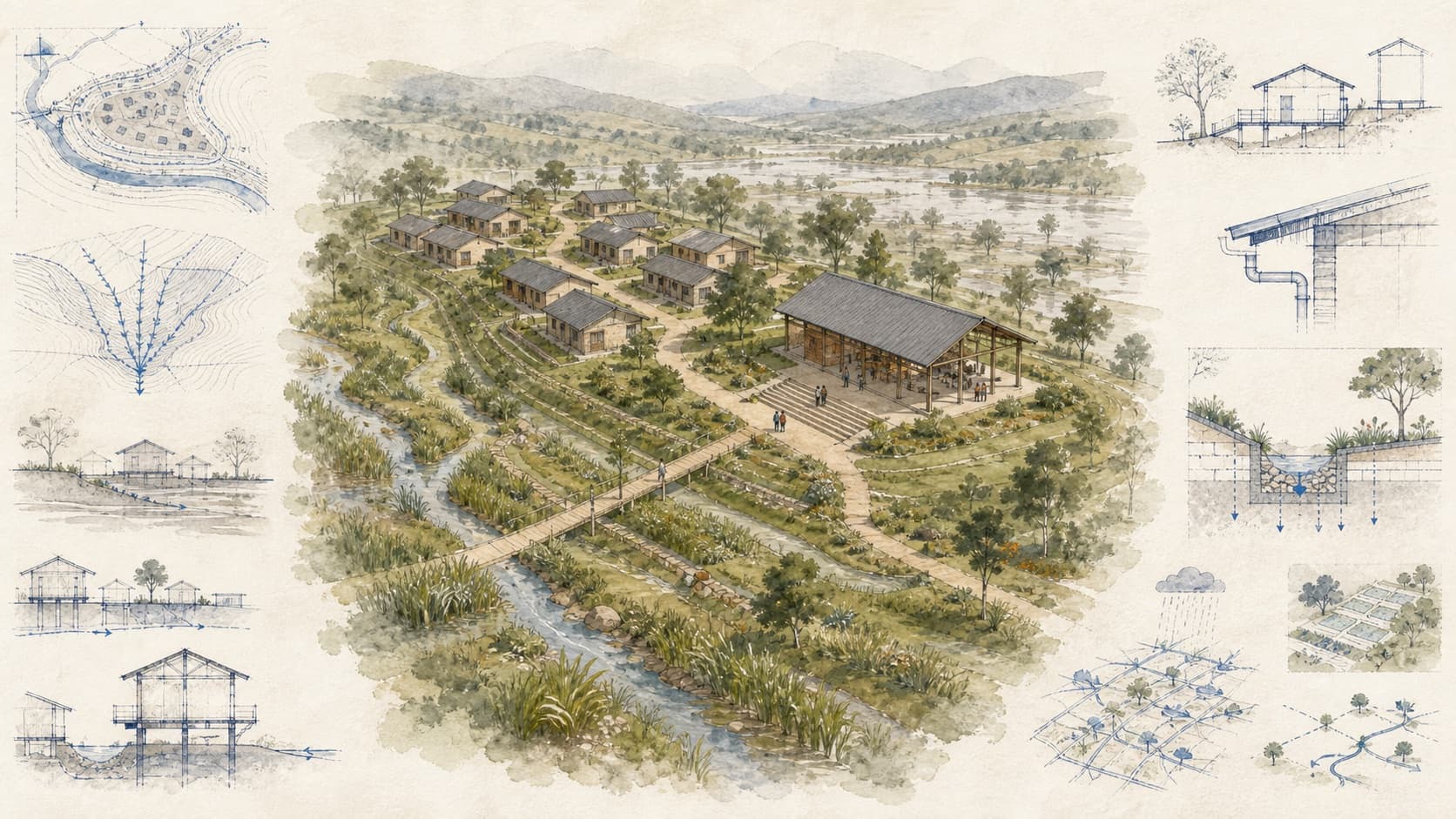
After severe flooding destroyed homes in northern Rwanda, East African Power rebuilt ten houses and asked Journeyman International to help organize the settlement around long-term resilience. The Shyira Relief Master Plan treats drainage as civic infrastructure: channels follow houses and pathways, directing water away from living areas while making the system legible and maintainable. An identifiable entrance, trees, seating, and a central outdoor gathering place give the new cluster more than technical protection. They create a setting for ceremonies, conversation, play, and collective decisions as families reestablish daily life.
The conceptual site plan connects ten replacement houses with a broader landscape and drainage strategy. The master plan remains a recovery framework intended to guide future work. Its central lesson is that rebuilding after disaster can address immediate shelter while also investing in safer circulation, shared identity, and the relationships that help a community prepare for future events.