The story
A polluted village pond becomes a living system for water, learning, and public life.
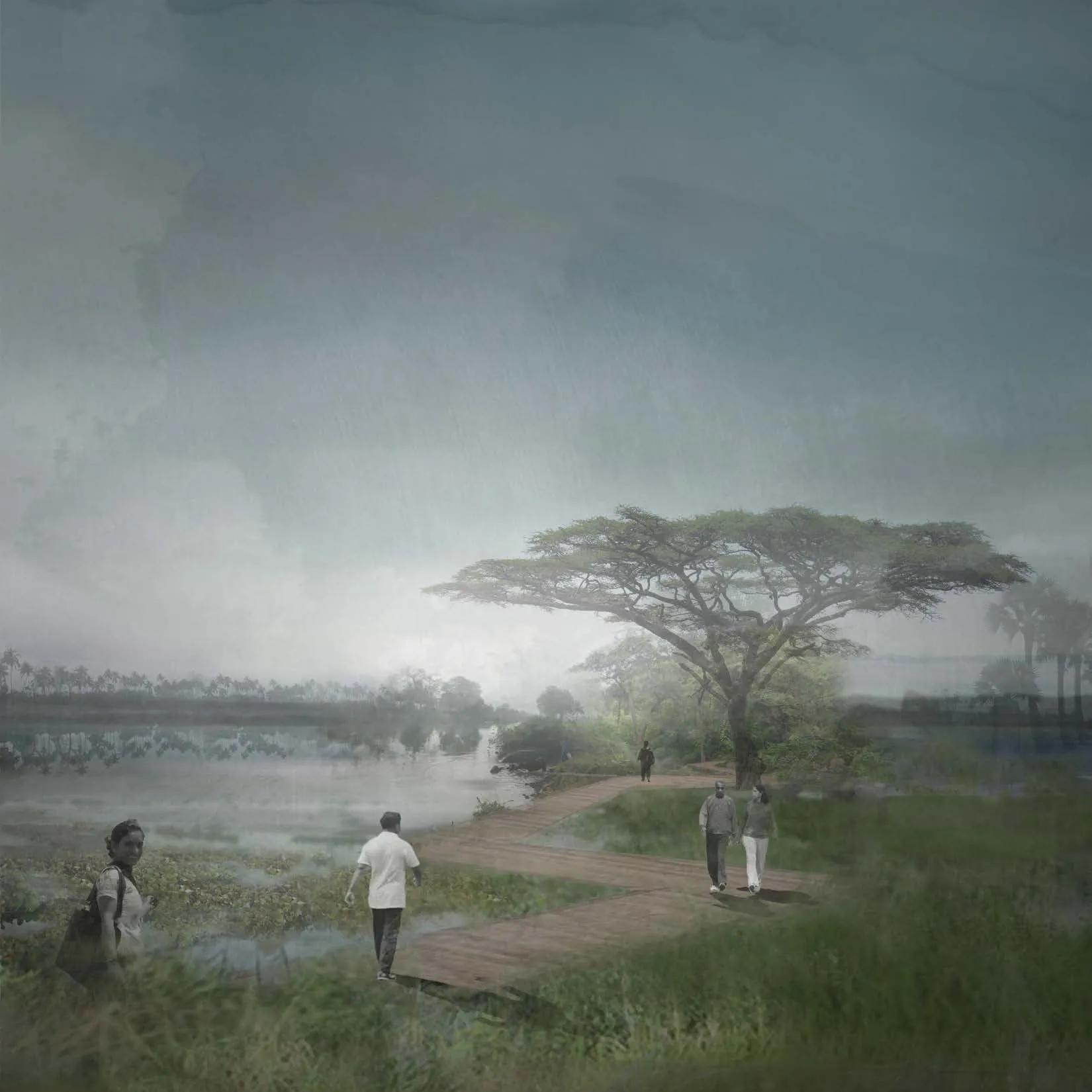
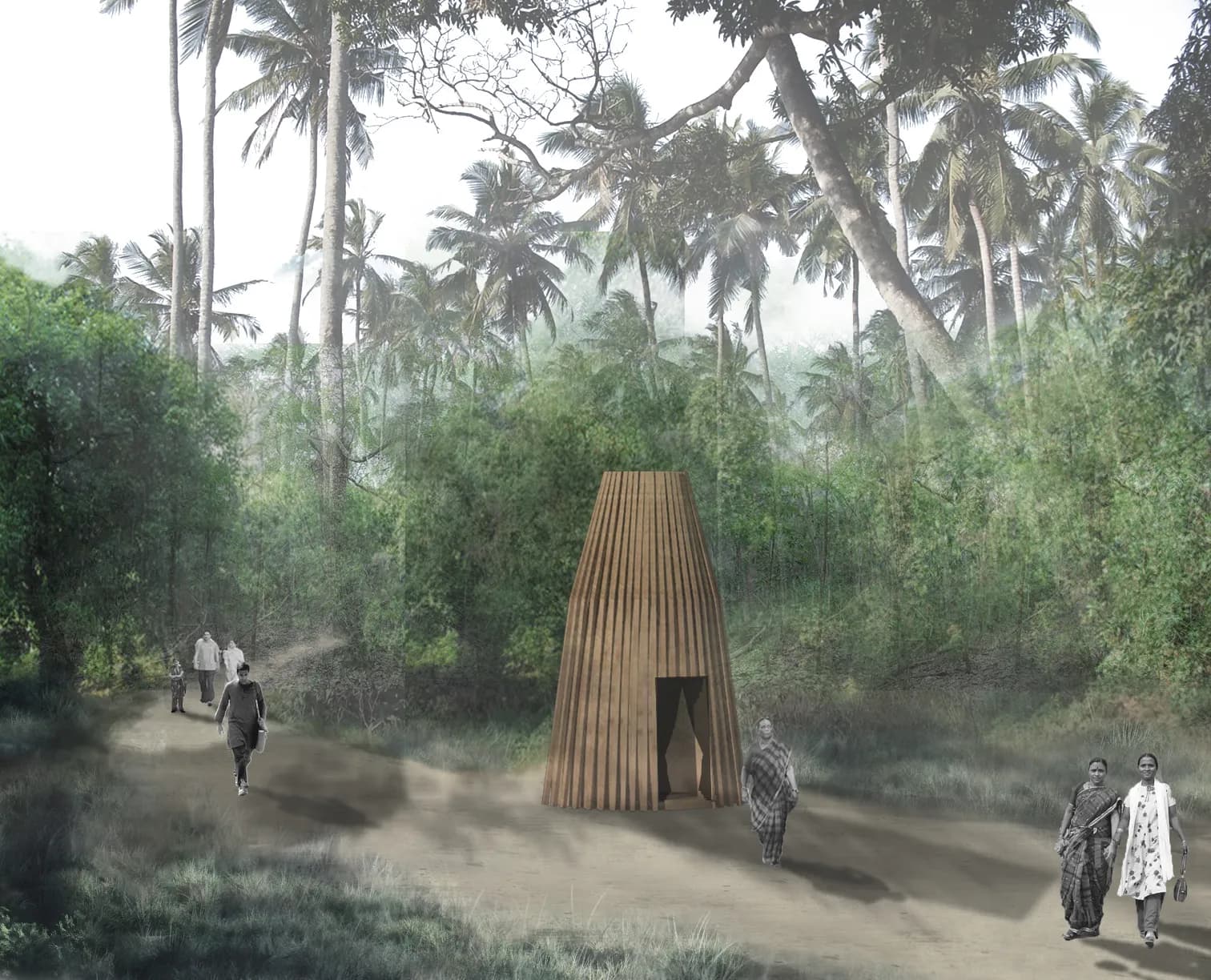
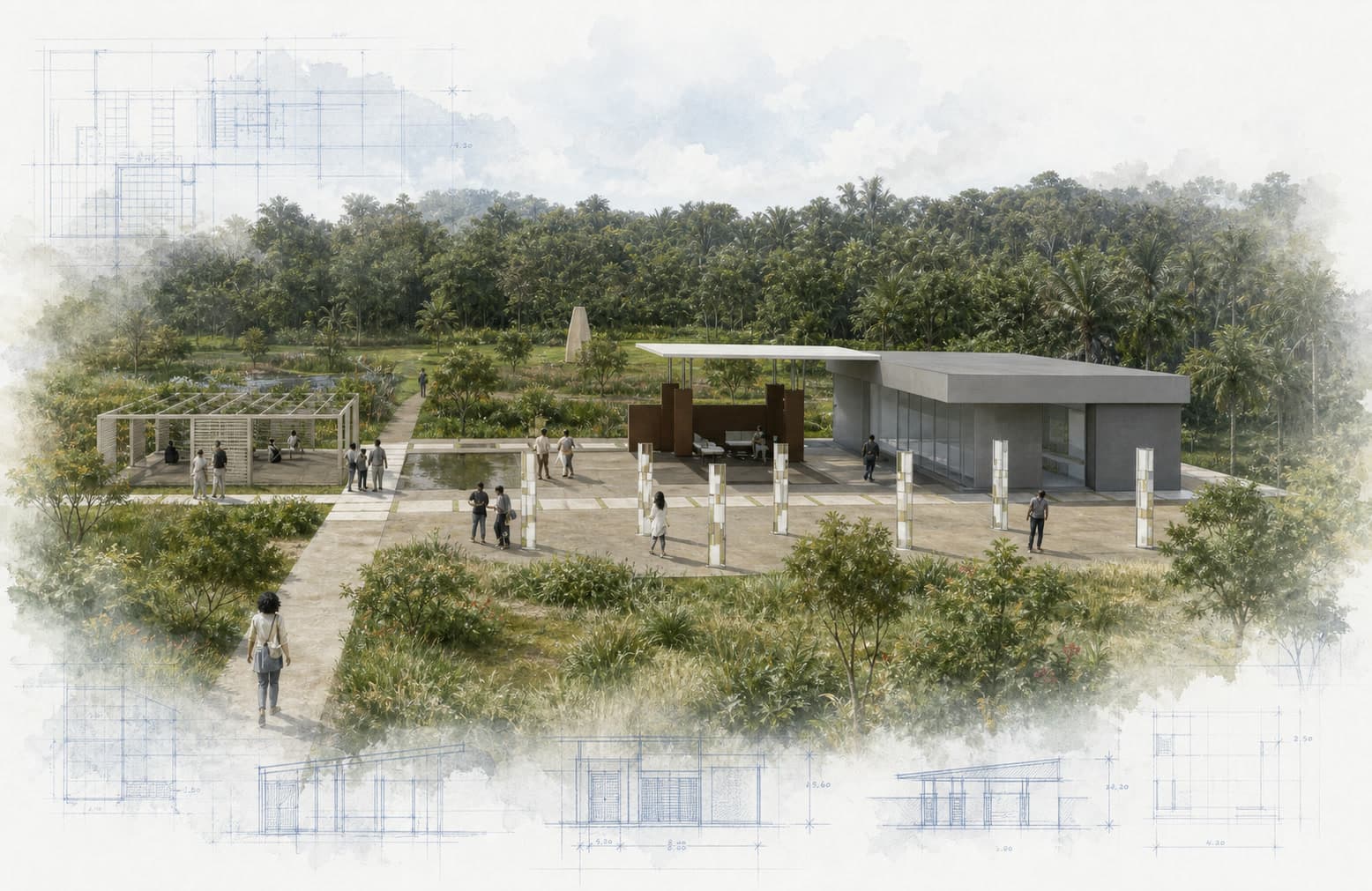
Kowtaram depends on a pond fed by an agricultural canal, yet testing found unsafe nitrate, turbidity, and coliform levels linked to runoff, animal waste, and inadequate sanitation. The proposal replaces a maintenance-heavy single filter with a layered wetland strategy: canal water moves through sedimentation, aeration, and naturalized filter pools; monsoon runoff is buffered by planted wetlands; and floating islands help clean standing water. A concrete path defines the wetland edge and connects an education center, sanitation, recreation, and places where residents can observe how the system works. Tropical forest, riparian, and emergent planting would be phased with cut-and-fill work, modular construction, and recycled materials such as bottles used in floating wetlands.
Community participation is essential to affordability and stewardship. The 2016 senior project presents a detailed ecological design. It remains a proposal and potential prototype for rural treatment wetlands—one that treats clean water, sanitation, habitat, and public understanding as a single landscape.